First Person Puzzle Puzzle, Light platforming N/A Unreal Engine 3 weeks (half time) Made by me (Blender, FruityLoops)
Goal:
I wanted to work with a simple puzzle with clear presentation, and work with a flexible theme that justifies the action.
I also wanted to work with music to enhance the mood of the level.
Pacing and Mood
In puzzle interactions it’s important that the player be put in the right mind space. It’s easy to teach the wrong lessons. In this level the player should learn:
“I can feel out the mood and explore at my own pace. Observation teaches me the logic of the level. It’s okay to make a mistake, experimenting is okay.”
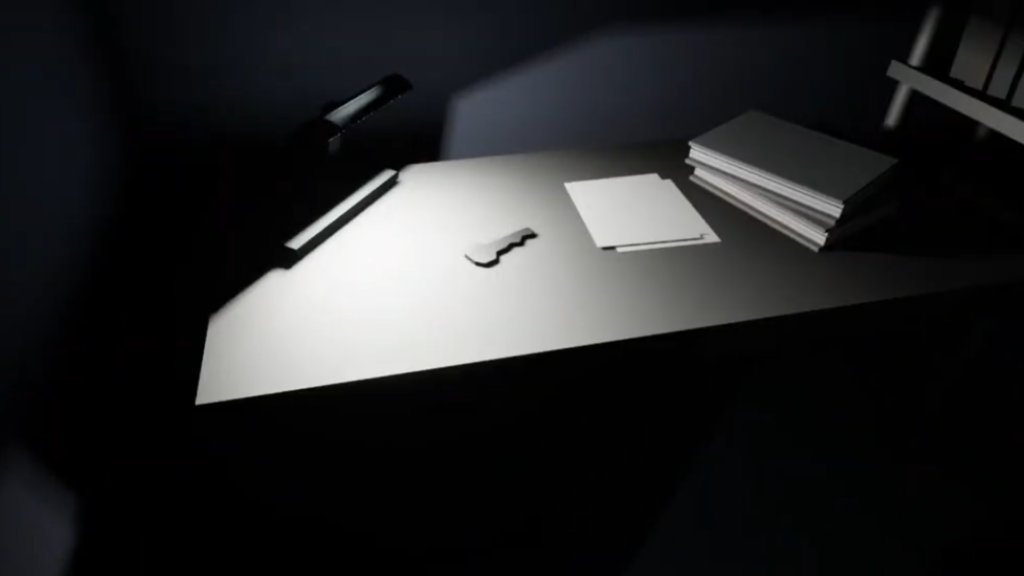
In the office at the start of the level the door is locked, but the key is on the table. This doesn’t strictly make sense, but teaches the level off abstraction; They need a key – a key of similar color to the lock is nearby. Like things belong together. The solution is presented nearby.
The soundtrack plays an important role: slow brooding music indicates a deliberate pace. The detective fiction mood affords gameplay of the kind we want.
Feedback
Because both physics puzzles and exploration rely on observation feedback strategies are important. The more the player can deduce mechanics, routing and interactions without being told, the more they can make the kinds of deductions required for puzzle solving. A player being told to open a door will try to find a key. The feedback is a framing device.
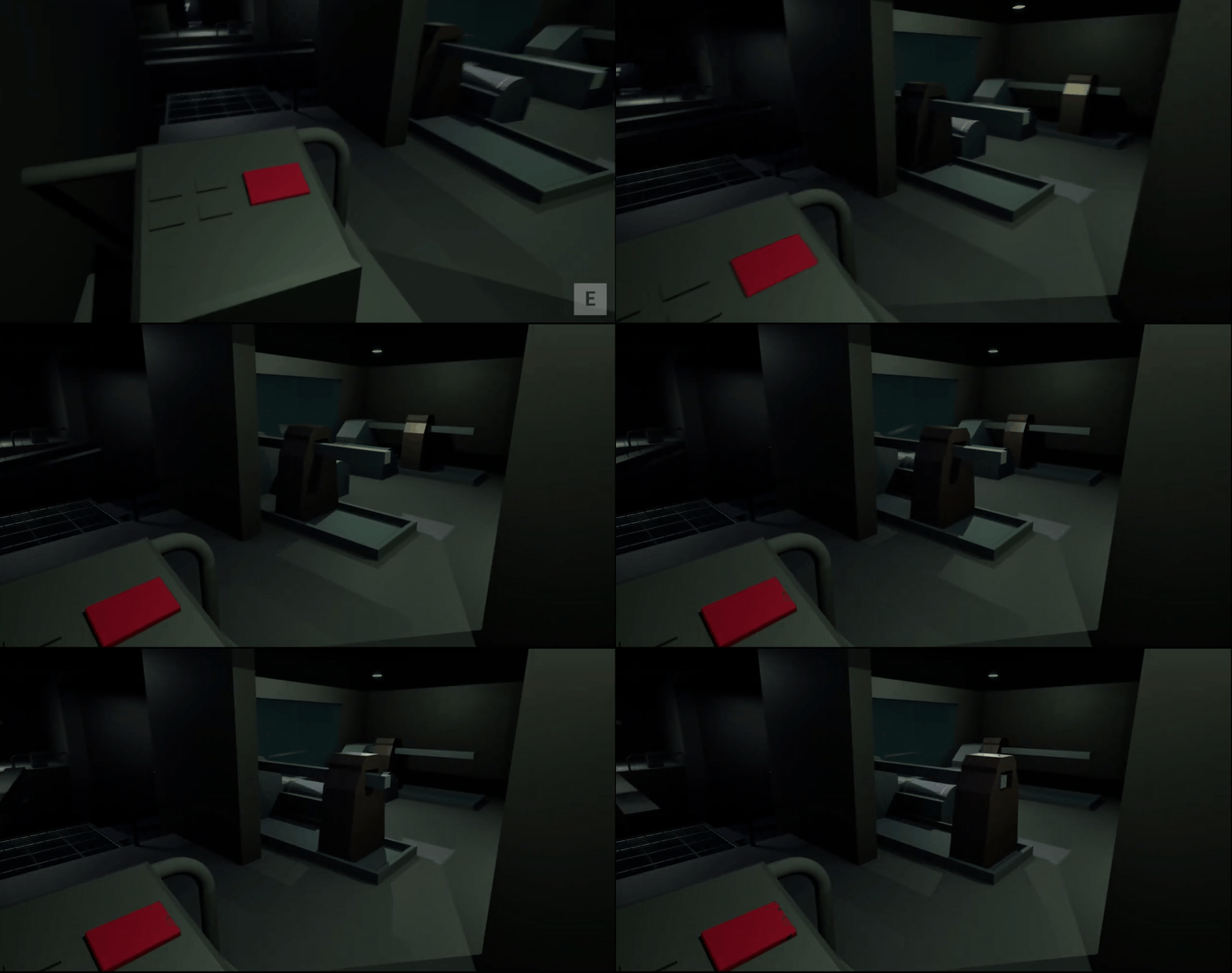
Interactions in this game are indicated with an “E” icon and are feedbacked with sound. The machine makes different sounds at the rotating beam and the weights to indicate that these are distinct. These strategies lead to better discoverability.
Machine Room (Observation)
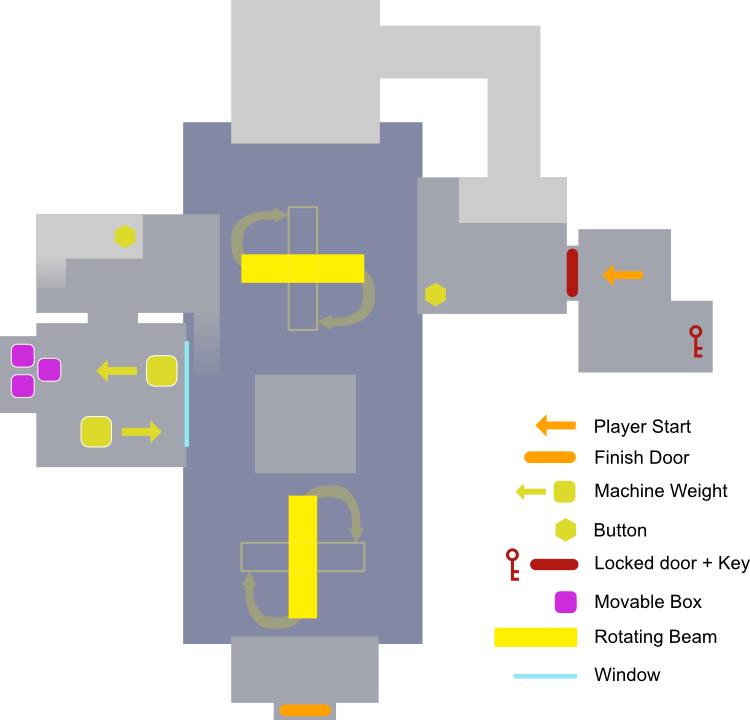
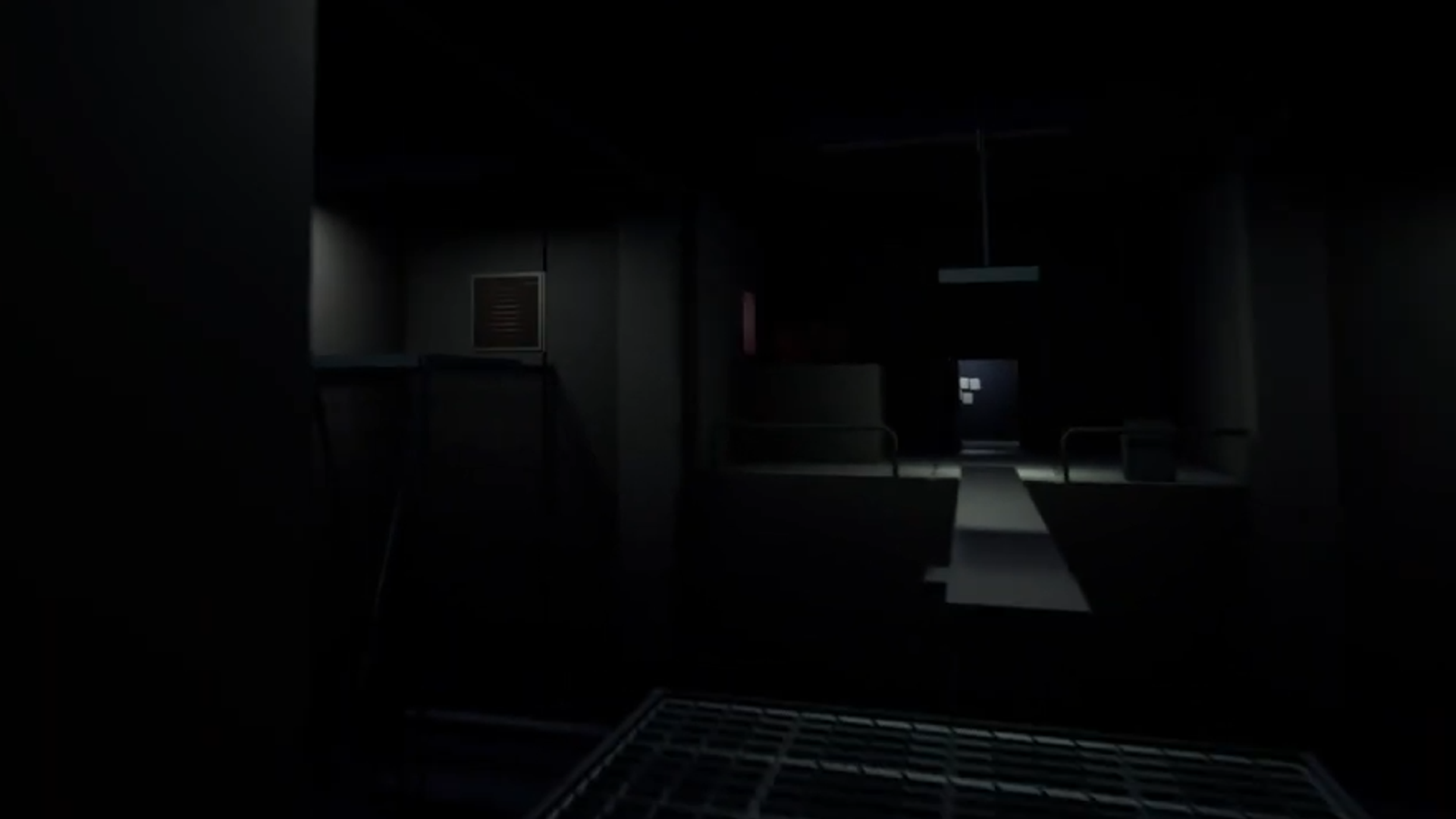
Once on the other side there are a few things to notice:
1. Another red button. It looks exactly the same.
2. A better view of the machine. Sound, movement and color helps the player notice a connection with the beams if they press the button on this side.
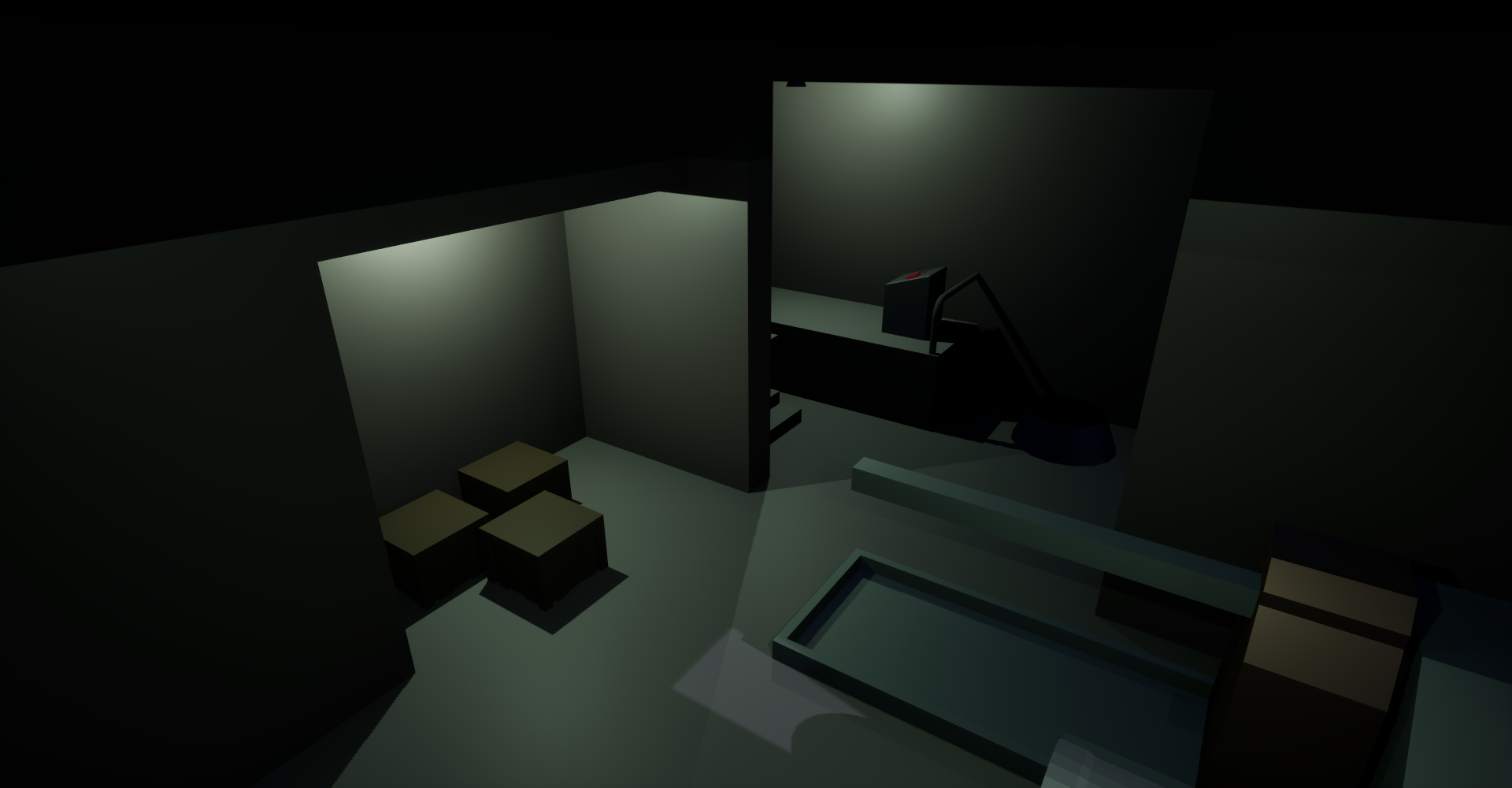
3. Boxes that can be moved.
4. If the player turns to pass the beam in the opposite direction, they’re likely to notice the vents, they are lit in a different color to indicate an entrance and an exit. Looking closely boxes are placed near the vent hinting at the solution.
First Interaction with the Machine
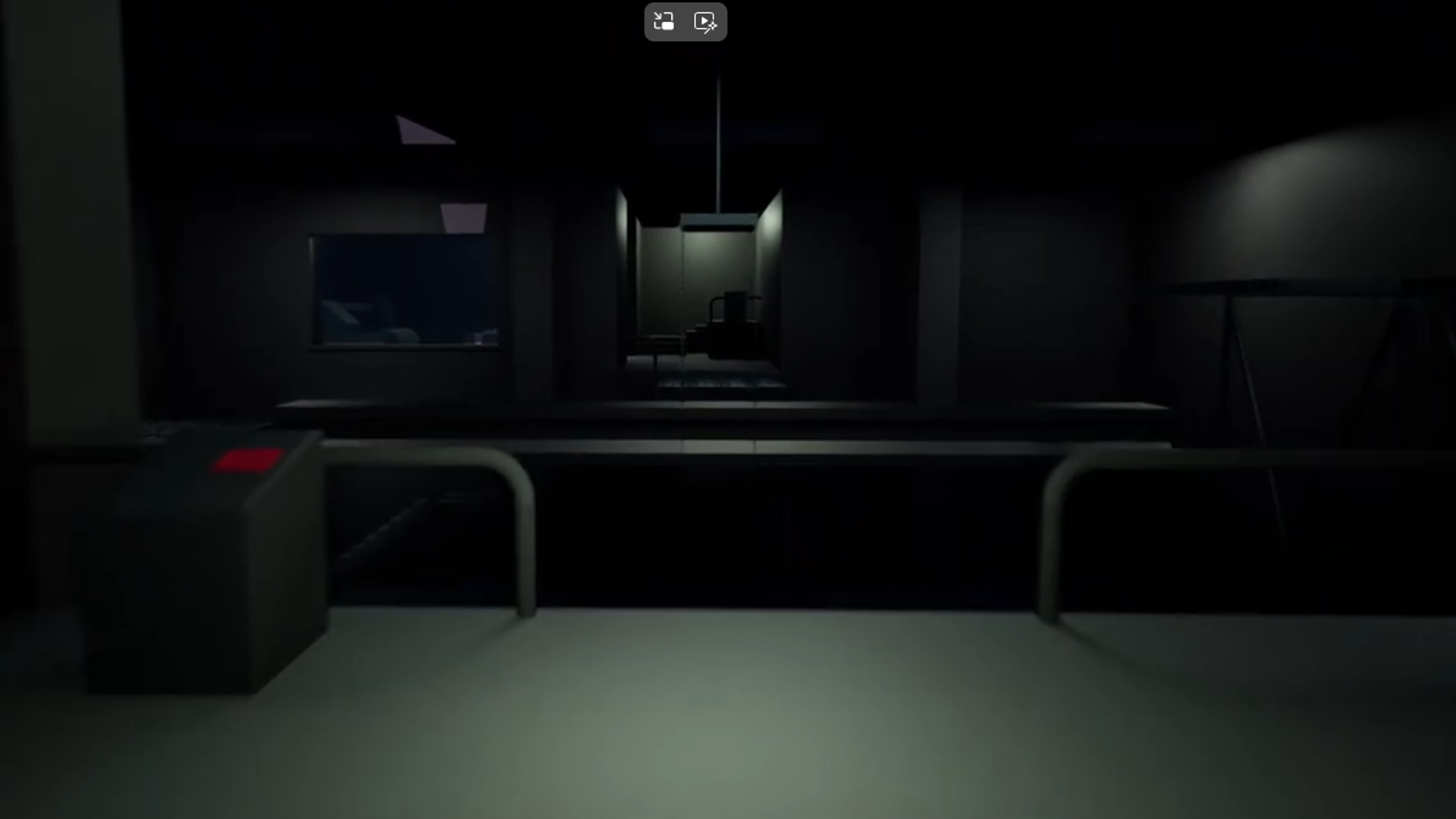
In the main room there’s a beam, lit to be the main focal point, and a big red button next to it. When the player’s positioned to press the key the counterweight machine on the other side is in view. They press the key and both beams rotate and both weights move. The player can now pass to the other side.
Because of the framing when they leave the room they are likely to miss the ventilation on a ledge to their right, if they notice it now, it’s not a problem because they need to pass to the other side first to reach that area. The beam starts in the wrong position for the player to pass to the other side.
Either now or later they will follow the leading line of the beams to see another door of the same kind as in the office – we have suggested that this is an exit.
Machine Room (Solution)
Blocking a counterweight with a box stops the beam from rotation. This makes a clear sound. There is a tray like support that the weight moves along, affording ”place things here”. The boxes are of a size to fit this contraption.
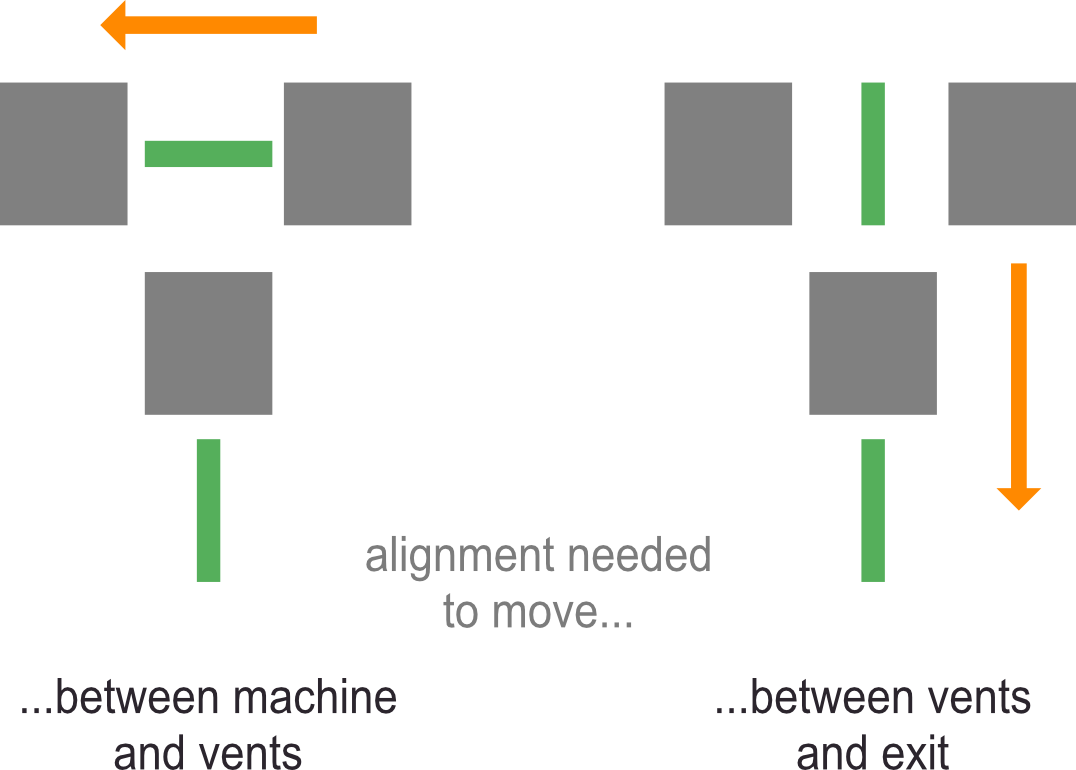
The player must deduce that:
1. The beams need to be aligned toward the door to reach it.
2. The first beam must be rotated away from the postion where the door can be reached in order to reach the vent.
There are several possible interactions with the machine that allows this, but random interaction with the machine is unlikely to allow the player to proceed, forcing engagement with the puzzle.
Vent (Solution)
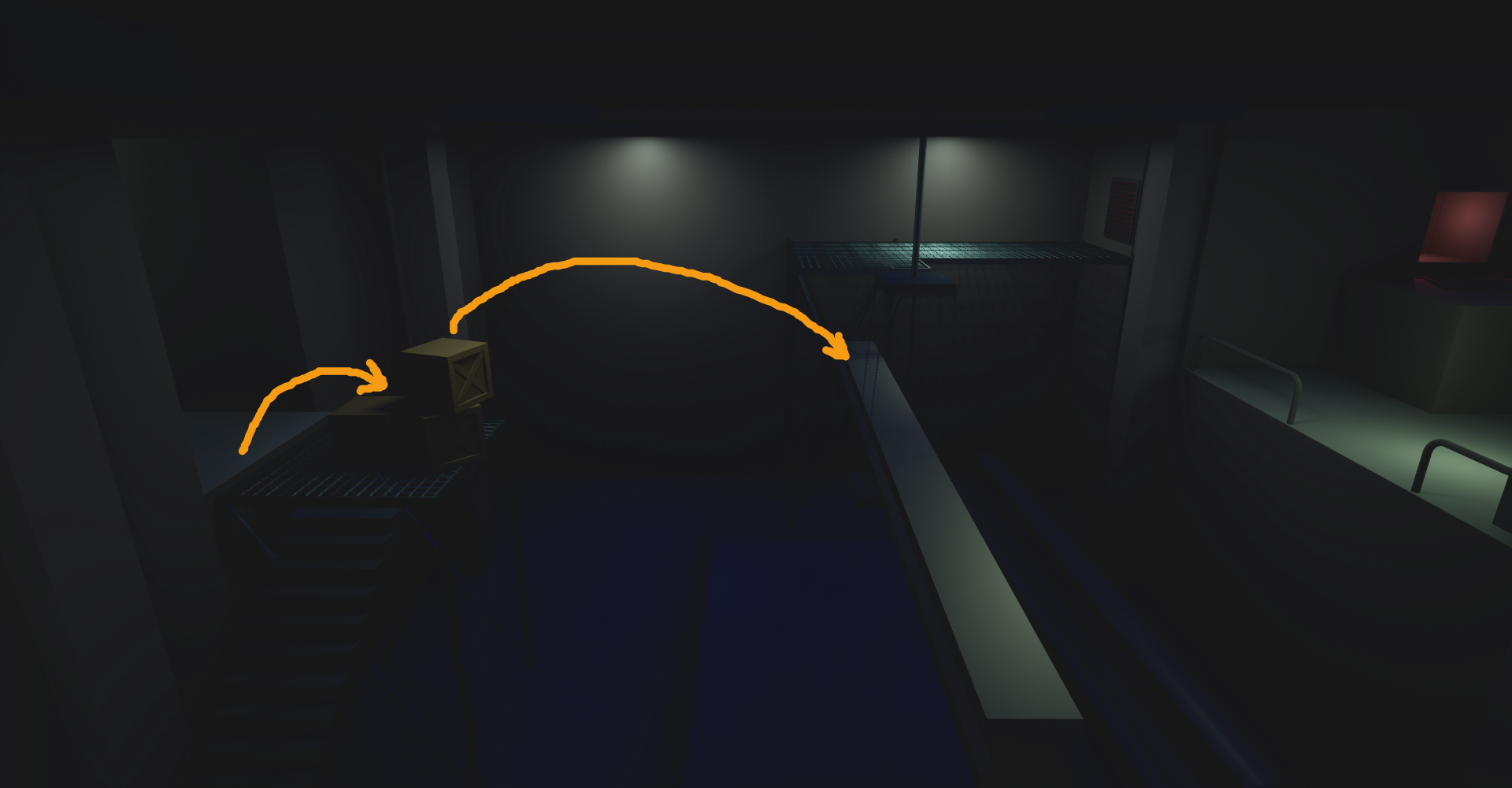
The vent can only be reached on the opposite side of the machine room by standing on a box. The player needs to move a box over and then run the machine again to align the beams in the correct position and move through the vent. This works both as a twist on the puzzle on a traversal level and to ensure that the player actually understand the machine.
Alternate Solution
It’s possible to use boxes to jump to the beam from the wrong position and avoid the vent. This is acceptable because the player must still find two uses for the boxes and interact with the machine. The machine moves to fast for the player to be able to jump without creative use of boxes.
Blueprint
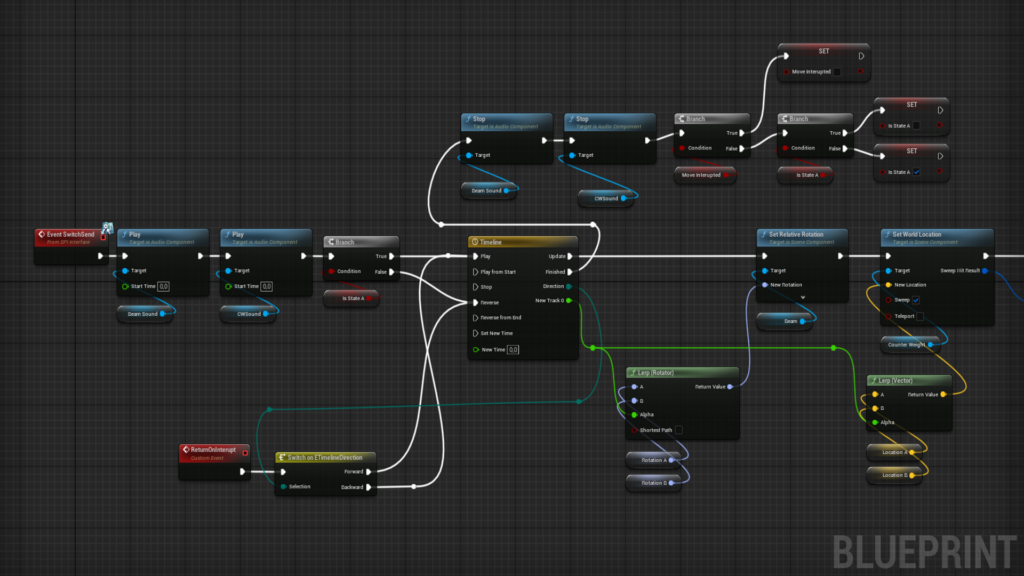
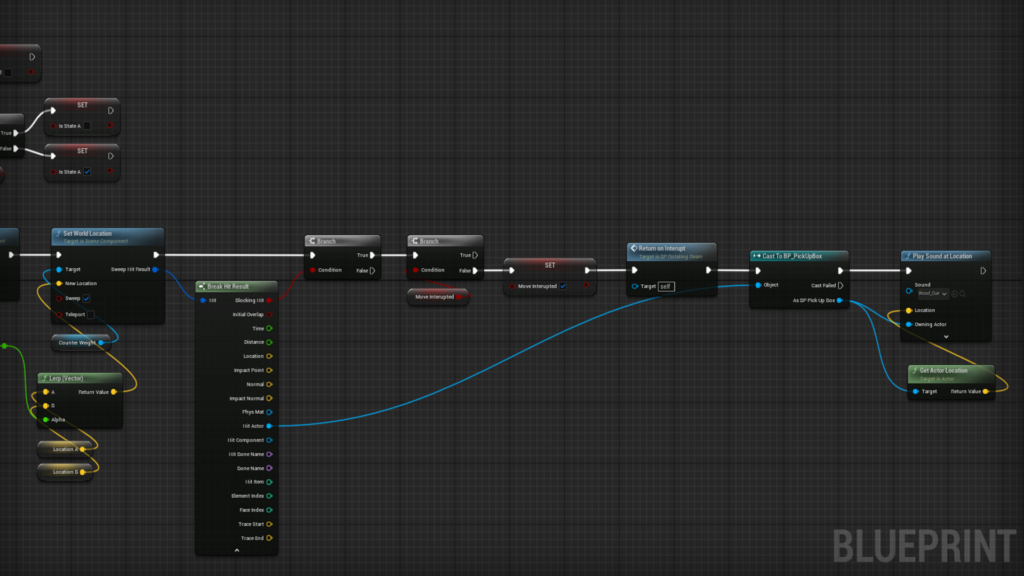
I used the fact that the timeline node in Unreal engine tracks direction, together with the sweep collision check to make a machine that detects blocking objects and reverses the operation in that case. This solution seems to me to be reasonably robust, easy to implement and in line with good practice for blueprints.