Modern RPG Hub movement, light stealth VtM: Bloodlines Unreal Engine 8 weeks (half time) Made by me (blender)
Goal:
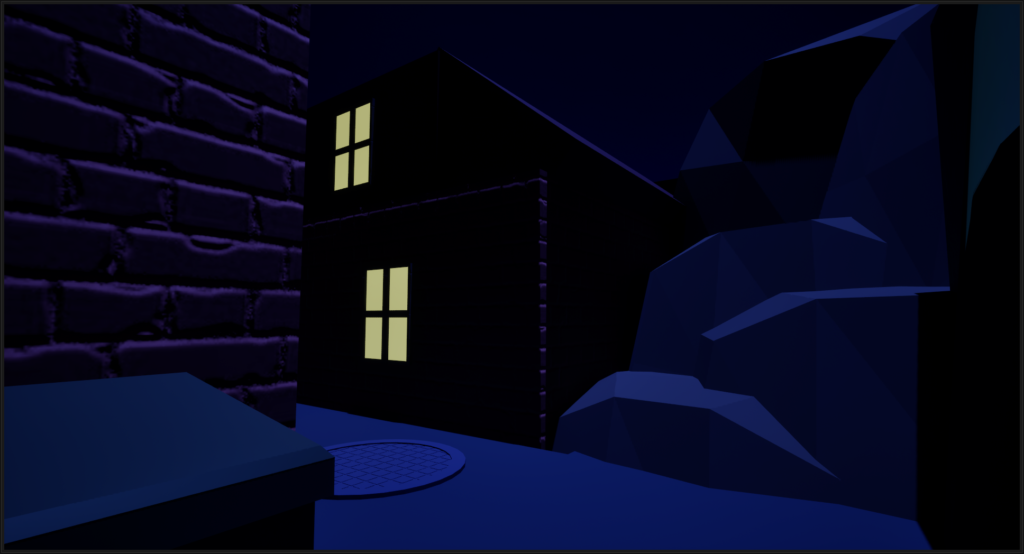
I wanted to work with non-linear gameplay, abstract and compress a realistic city for gameplay, and work within the settings and metrics of a game that fascinates me as a designer.
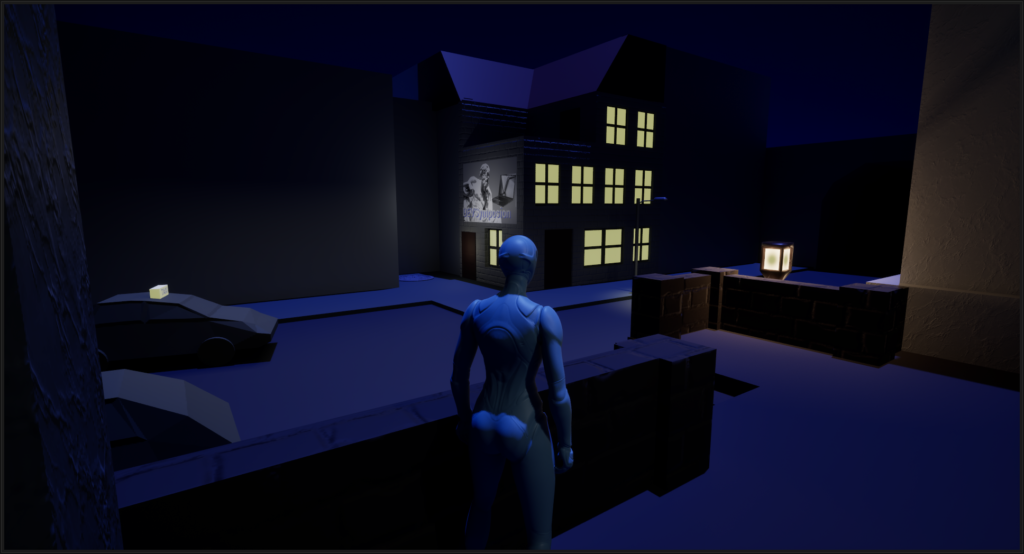
In Bloodlines, the various quest locations are placed in districts with fast travel rather than in an open world. I wanted to work within the games metrics and setting and use the compact style and loose use of references to explore capturing the feeling of my home town within the gothic punk aesthetic. I’ve stayed within the game design of Bloodlines but have modernized the level design when needed.
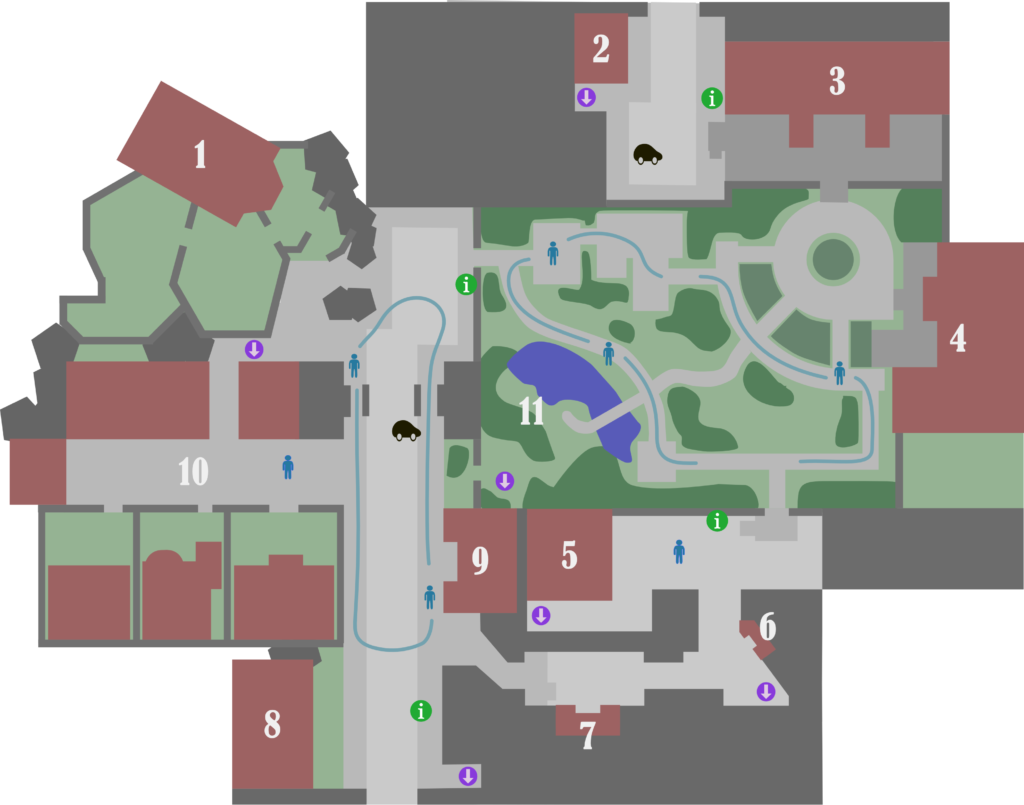
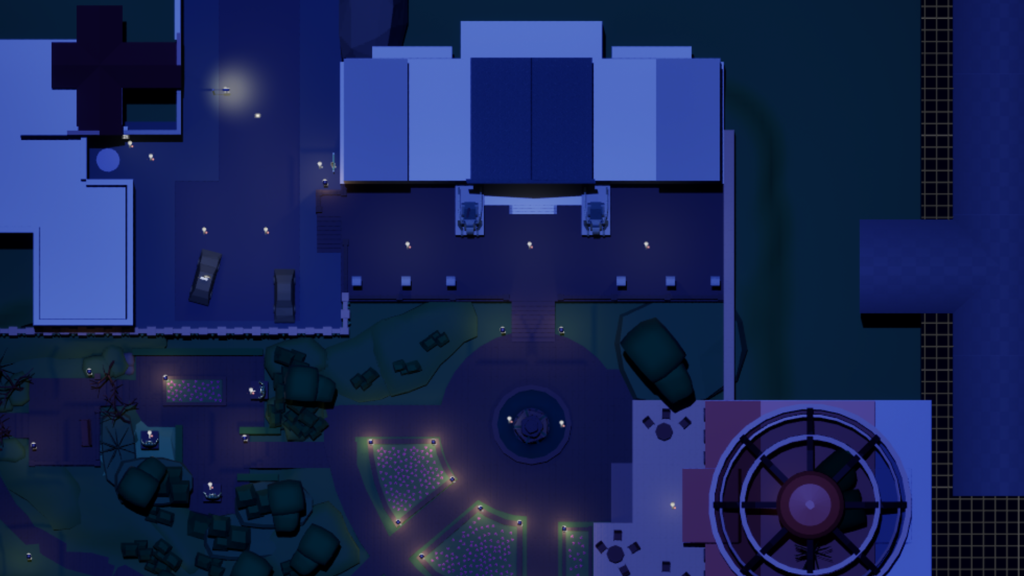
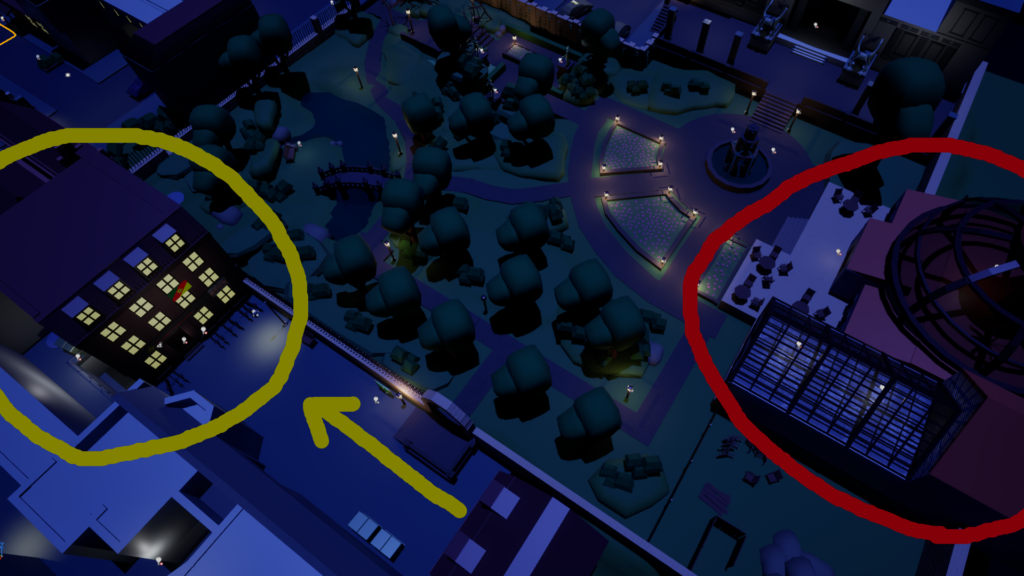
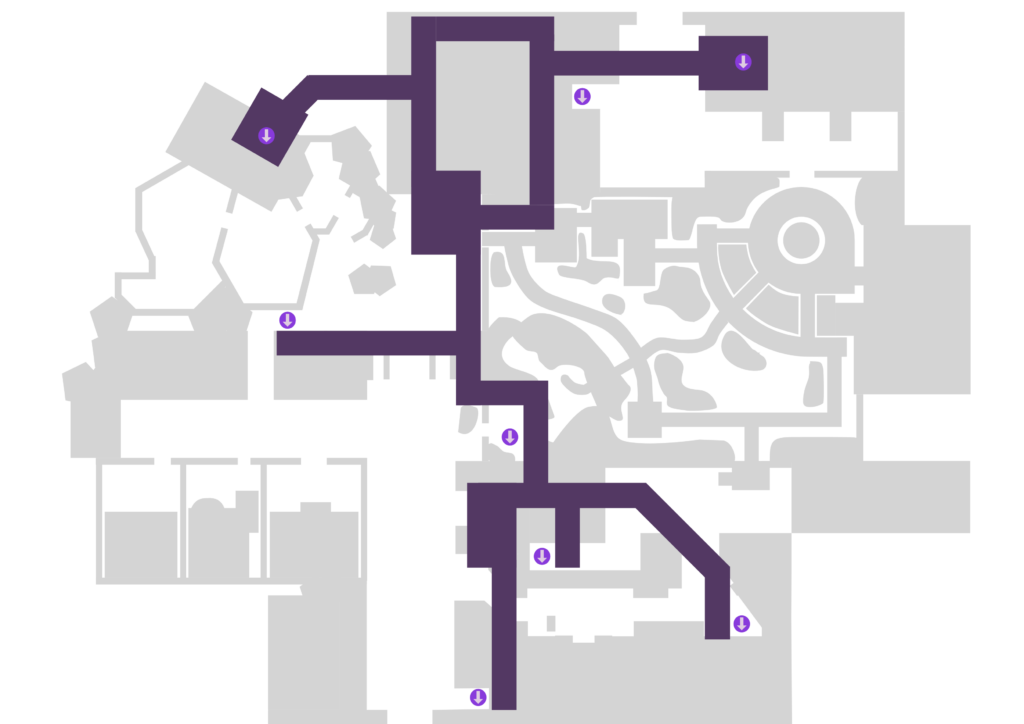
Topdown
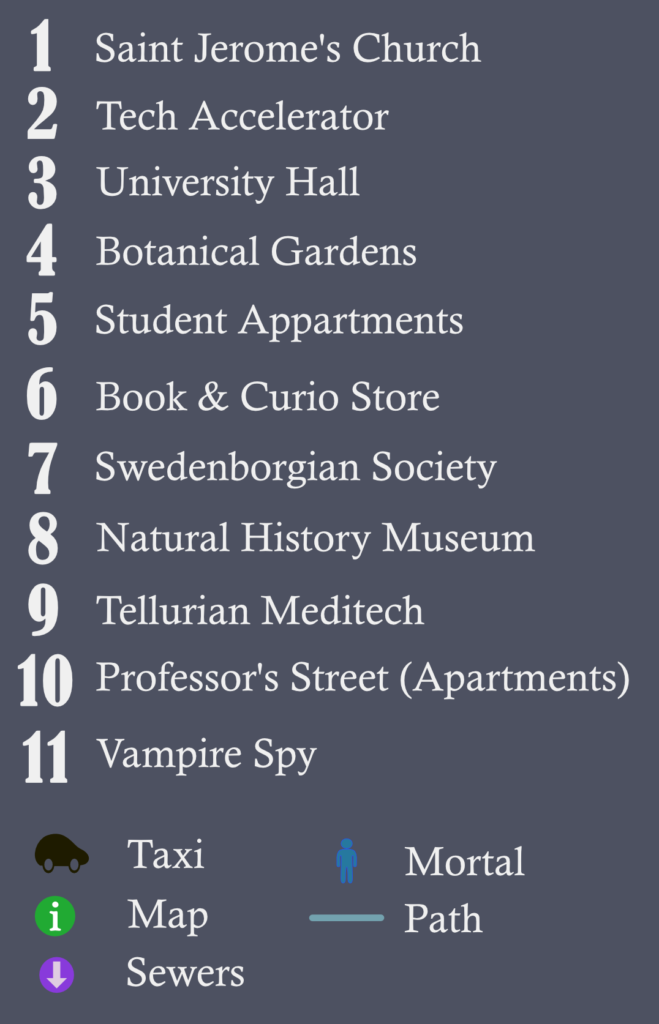
The open-ended flow of a Bloodlines District has several distinct needs. The player needs to be able to find their way whatever path they take, which may vary both with playstyle and with character stats. They should always be inspired to explore new places but never be overwhelmed. Important gameplay elements also needs to be placed so the player can get to them without frustration from any part of the level.
All players need:
Roaming NPCs for Feeding
Bus Stops with the District Map
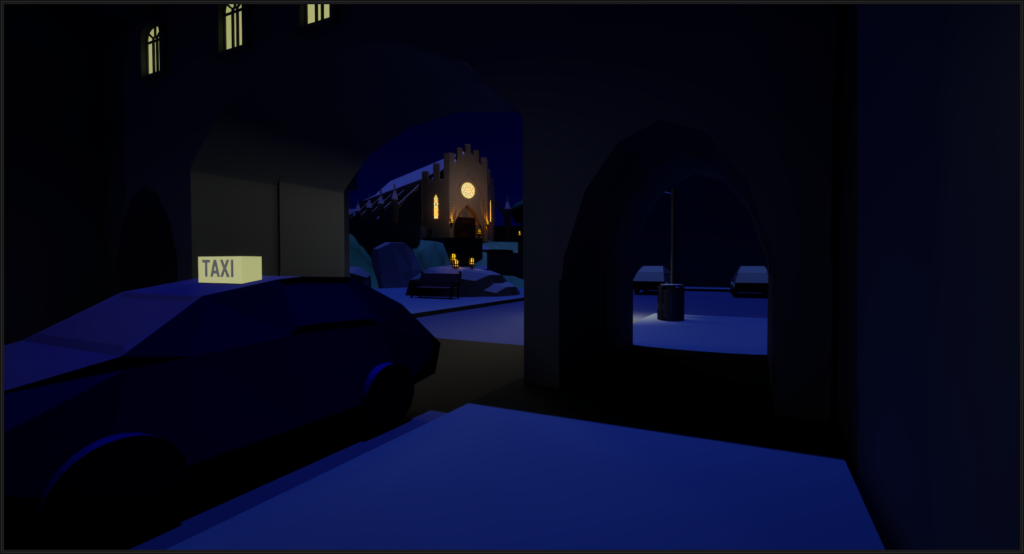
Taxis for Fast Travel to other districts
Some player characters are monstrous and can’t show themselves. Thay need:
Stealth paths to use and areas where mortal NPCs walk around to avoid
Sewer accesses to allow safer travel underground
The main Points of Interest are buildings or areas the player can visit to find different types of gameplay:
Elysium to act as the base for NPC factions
Side quest givers with secondary gameplay for specific player builds and wants
Levels for the combat, exploration and stealth loops
Shops to buy and sell and manage inventory
Apartments for mini-levels and NPCs that are not signification enough for their own point of interest.
University Hall – Example Point of Interest
Function: Real world reference:
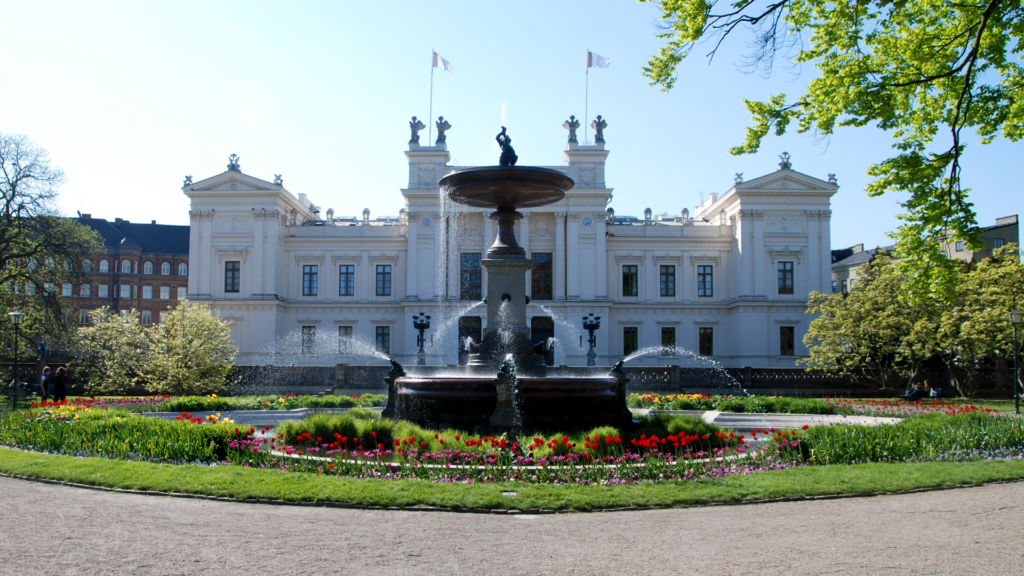
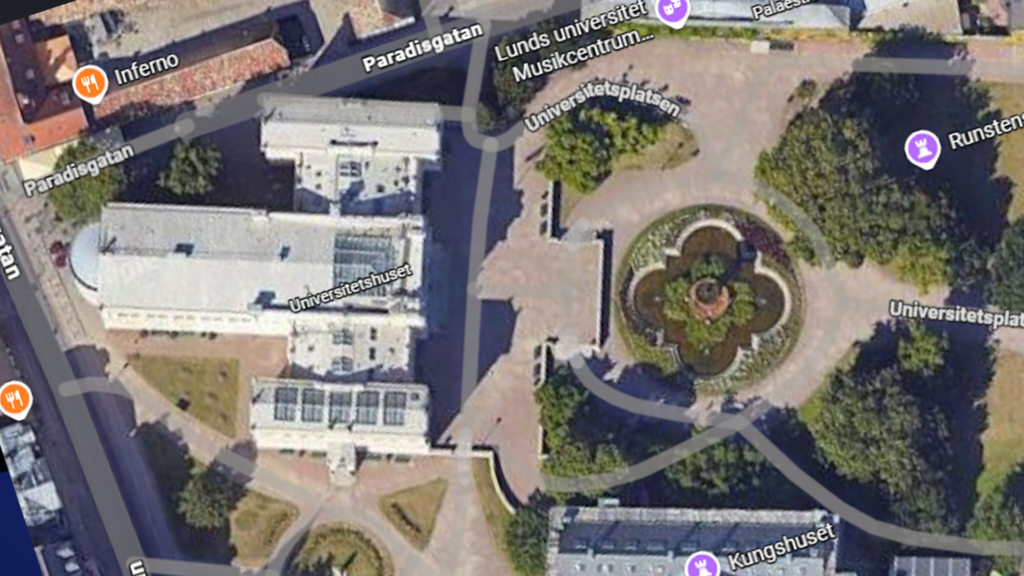
Questgiver – Elysium Lund University Main Building
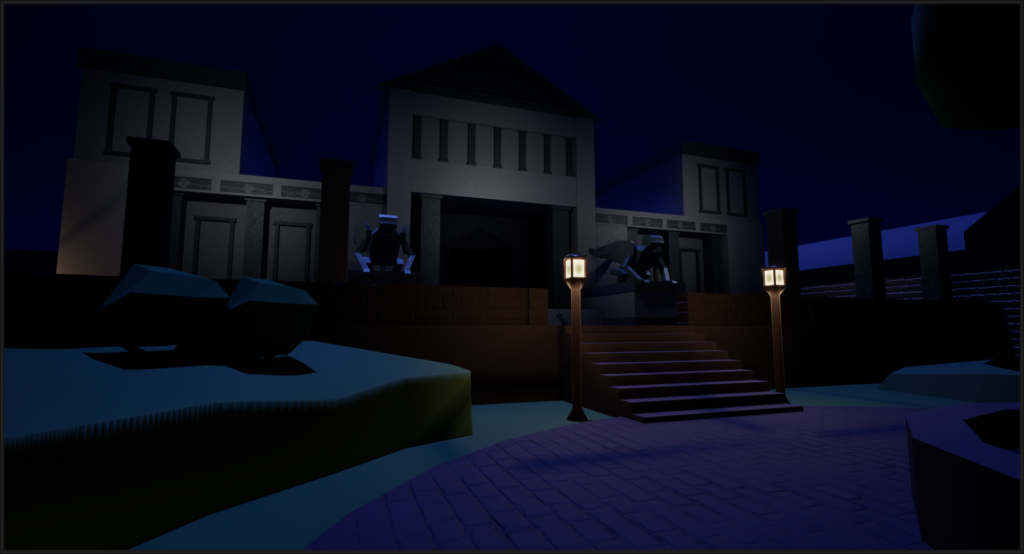
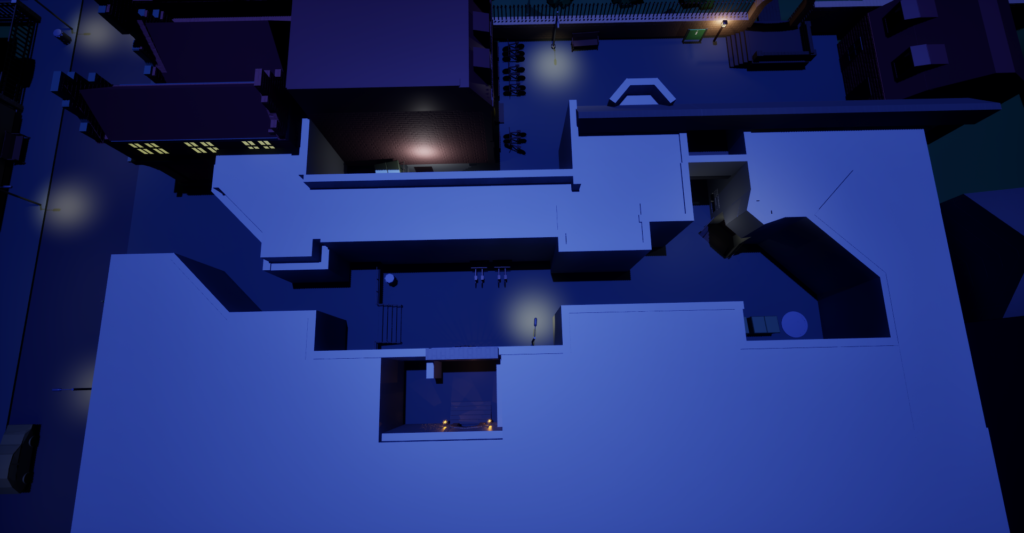
The vampires gather here for political meetings. The Prince and those close to him hold lectures, rallies and trials in the old anatomical theater. The Nosferatu have a tunnel entrance where they smuggle in victims and corpses for autopsies and vivisections. This area would have space for events the player could attend and this would also be a place to meet the Prince or close associates for Quests.
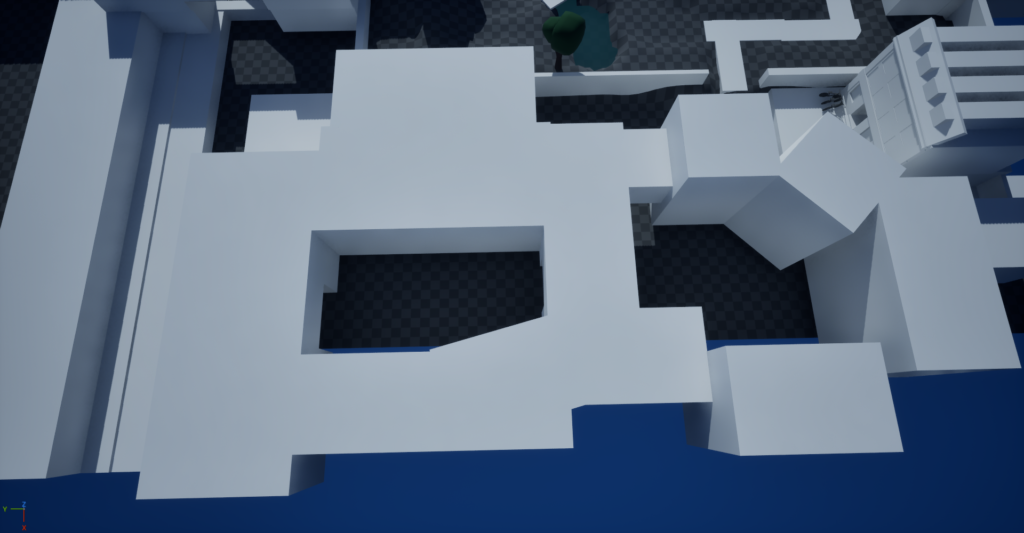
For this building I liked the placement of Lund University and the Sphinx as symbol of guarded knowledge. I placed the building at an elevated spot and tried to get the sphinx closer to the player path of entry. I tried to use minimal elements to evoke a sense of neo-classical architecture.
Design Principles
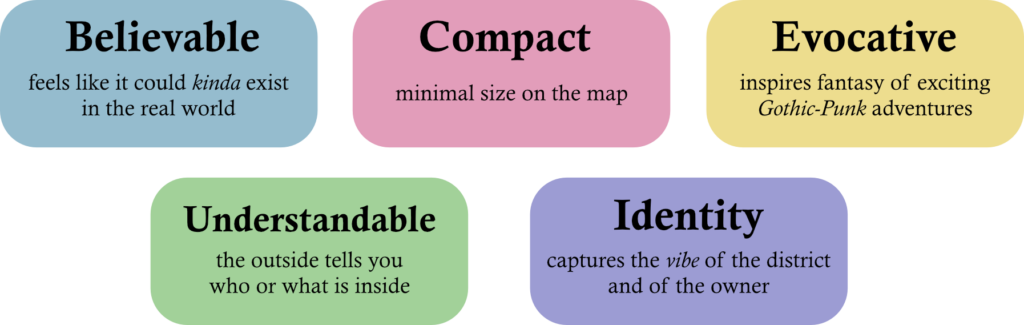
Some buildings in the level are inspired directly by actual buildings, others by the vibe of the city, just like in Bloodlines. My design pillars for the level can be seen in the diagram below.
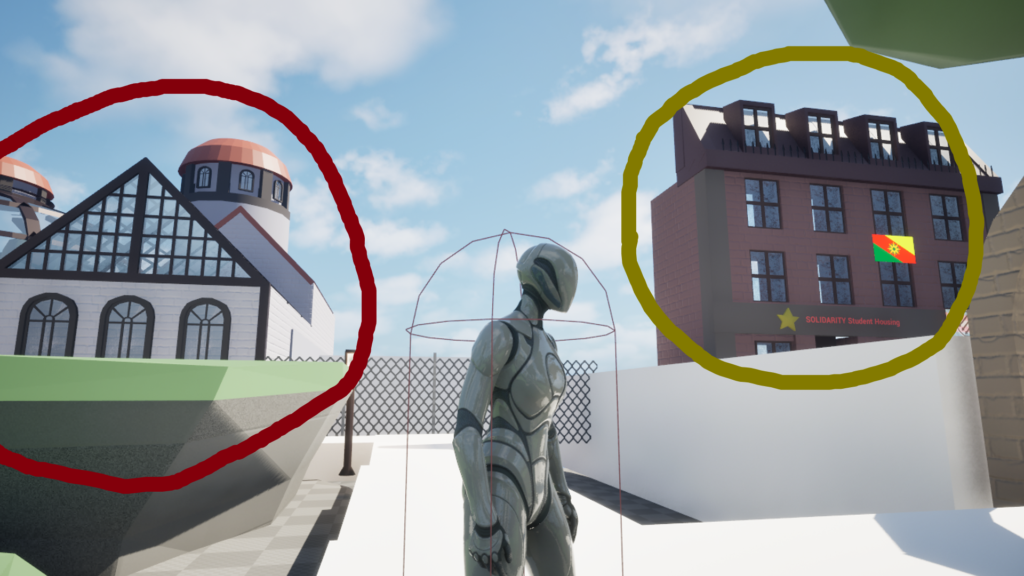
Most buildings would be enterable in game and in real life they would be spread out across several city blocks. Cheap student housing, High Tech Offices and University Buildings are placed more or less next to each other. Because of this I needed to make sure that buildings of that would be distant in real life should not be on screen at the same time. But it’s okay if they’re just around the corner!
Buildings don’t need to make strict sense. A player distracted by cool Gothic-Punk suspends disbelief.
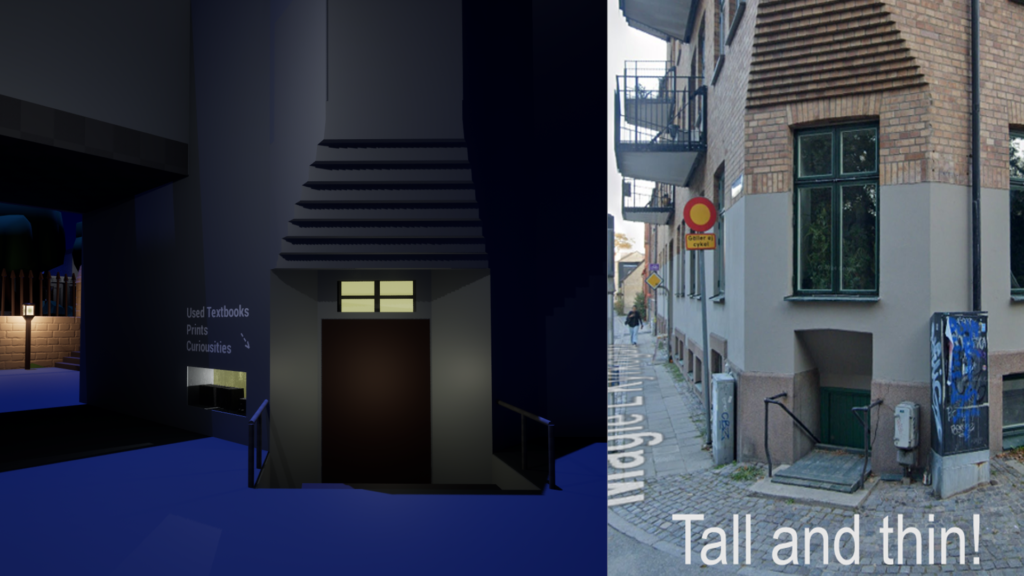
A big building is tall, not wide. When gathering reference I looked for buildings or parts of buildings that are naturally tall and narrow.
A naturally compact reference is of course the dream!
Process – Metrics
As part of my research I walked around in Lund and Malmö, look at maps and did breakdowns of the reference game.
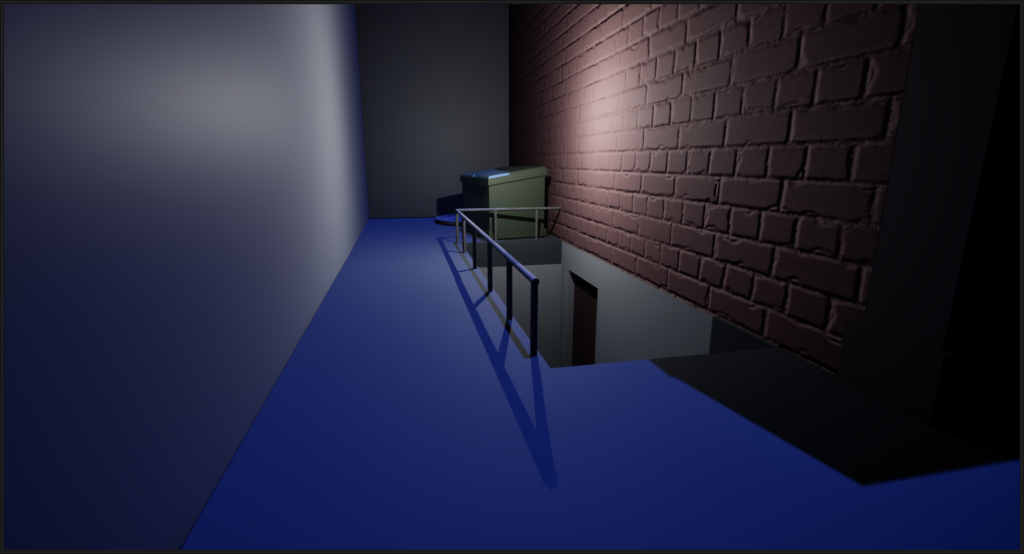
I used size metrics from the reference game both for gameplay objects such as doors but also for minimum alley width and such. The game isn’t very strict with these metrics so I used them as a guideline to get the district to feel appropriately sized rather than as hard and fast rules. The flexibility allows for trickery to create a more life like sense of scale.
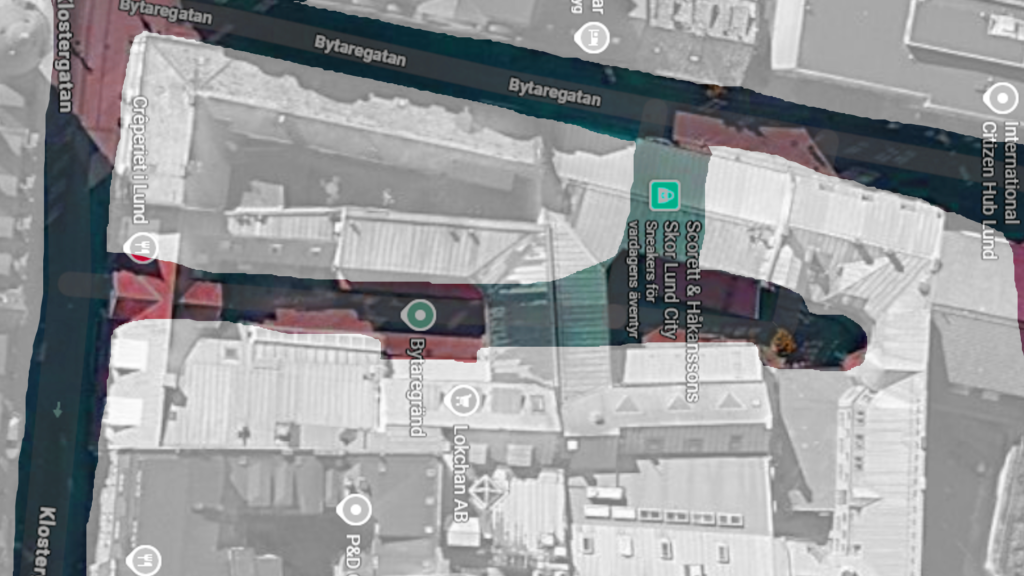
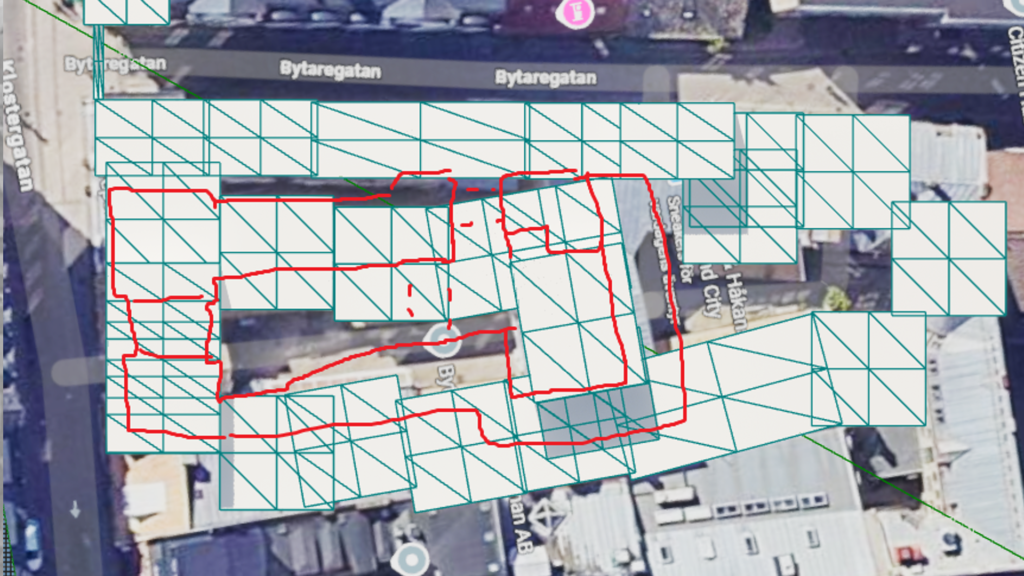
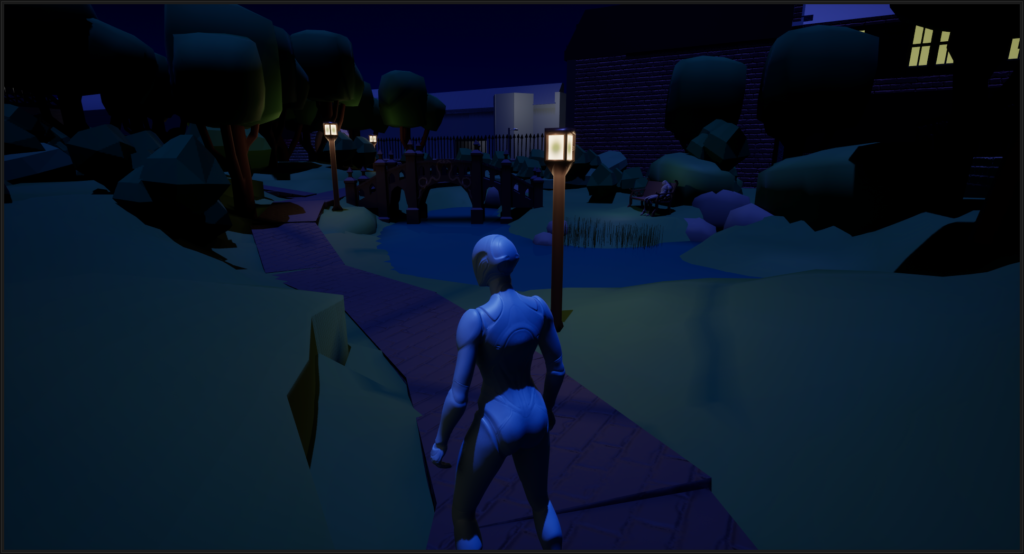
I blocked on top of real world maps to get drafts of real world street layouts, especially for the park and the connecting valleys and walked around Lund and Malmö to find compact and evocative street layouts and then tested my way into ways to use them to create distinct but playable areas.
Process – Cutting the Sewers for time
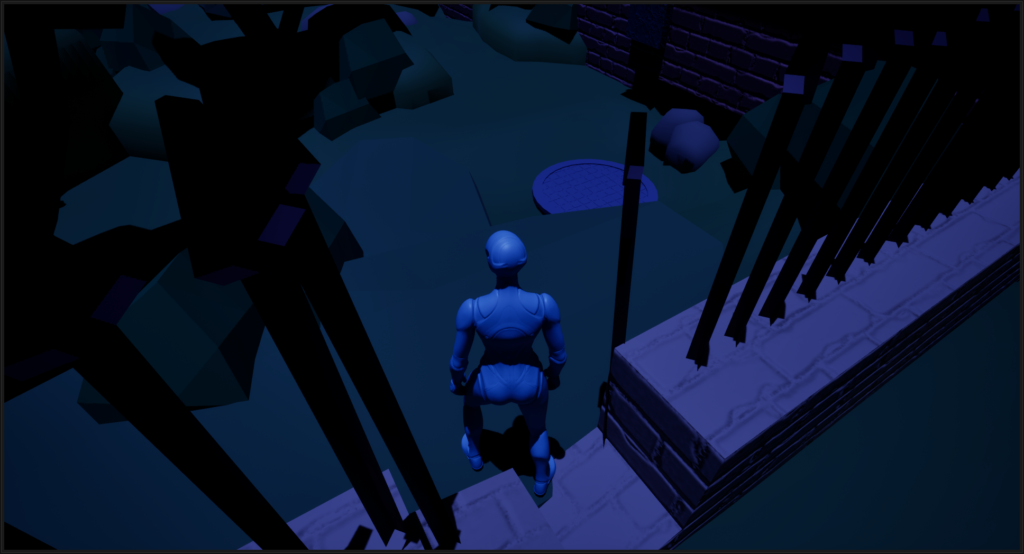
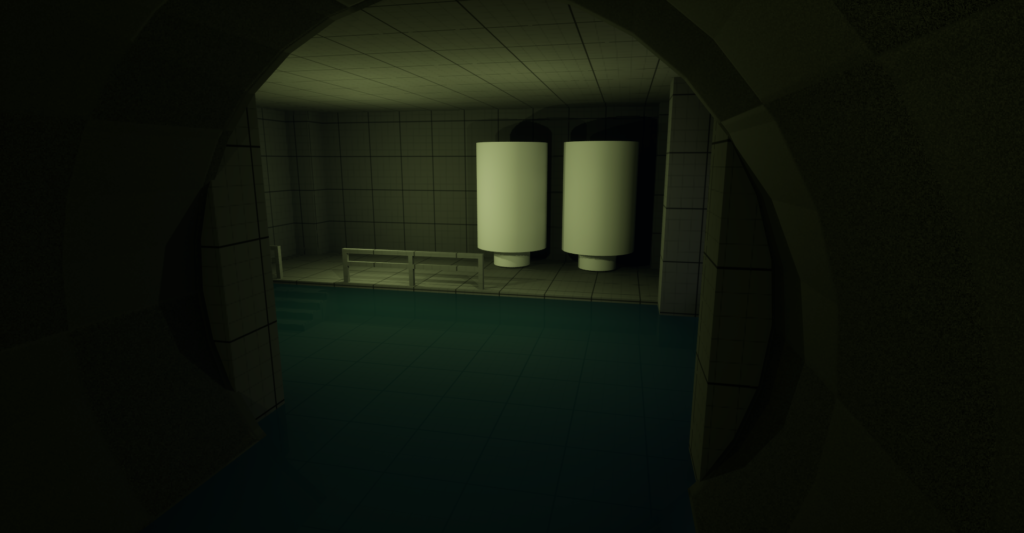
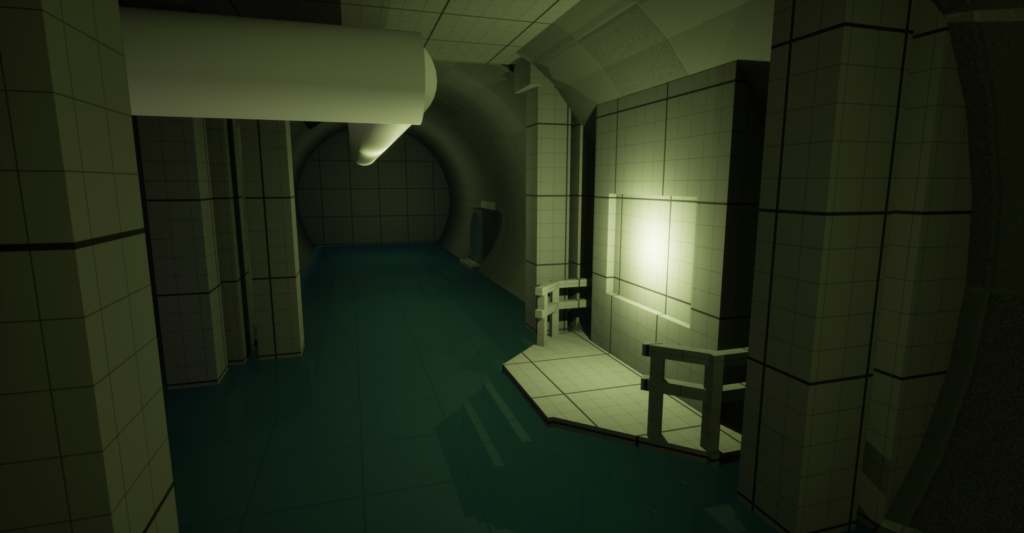
The sewers in Bloodlines is a fun and exciting concept that is sometimes undermined by being difficult to find your way around in. I did metrics and planning for sewers in my preproduction but didn’t have time to realize them to a sufficient degree. So I decided to keep it on the Top Down and just have the enterances.
In my research, I found that Bloodlines sewers are large enough for the camera but small enough to give identity. Strategic use of crouching for short periods makes the face haptically feel enclosed.
My strategy would have been to place some homeless people and underground entrances to locations as points of interest and try to differentiate different areas geometrically in terms of floor plan to make navigation easier. I further found that the identity of sewers wasnt significantly undermined by having boxy rooms for variation in which a tank or some mattresses (assets already in the reference game) could be placed to make the rooms distinct and functional as waypoints.
Process – Iteration and Feedback
Testers have an easy time navigating the main loop of the area with low levels of frustration. They like the mood and the “i’d like to go there” factor is there. I learned a lot about trying to block more compact modern buildings and have lessons learned about the process not least with regards to what blockout tools and reference materials would have been most useful next time. Studying the reference game gave me a deeper understanding of the strengths and limitations of the design and provoked thoughts on why city design has moved on from some of Bloodlines ideas.
I identified a significant layout too late in the process and had to make significant cuts for time because of it. I believe that prioritizing iteration was the right choice but killing darlings is never easy.
Post Mortem
The project was very challenging both in terms of blocking architecture, following a reference and getting the fairly large layout right. Because of this i should either have focused on the park, a type of area not in the reference game, or cut it and focused on the rest. By having to many unknowns they interlocked in a way that made iteration slower and forced me to downscope.
The lesson i take from this is to be more mindful of how many parts of a design requires an exploration process and to make sure to ground the majority of the work in knows so that those areas can support discovery in the tricky parts without unforeseen constraints stopping that.